
By Catherine Gosztonyi
Hi! I’m Catherine, a curious and avid librarygoer, currently pursuing a career transition into the Library and Information Sciences field.
I joined the Open Library Librarian’s Team as a Librarian-In-Training during the summer of 2025 to learn about the world of online libraries, contribute to an open source project, and be part of a library community. My initial objective was to learn how to work with book metadata in MARC format but what I ended up learning, and what I’m still learning, has far surpassed my expectations. Before I took on this role, I didn’t know how to code in HTML or Markup (or any code, really). I had never contributed to an open-source project or submitted a GitHub ticket – and now I’ve done all three! I’ve also created a curated collection, tagged books by subject to further categorize them within the Open Library catalog, and learned how to create book carousels using the subject tags to visually display a collection of books on a page.
As I write about and reflect on my Open Library journey, I’m so proud of what I’ve learned and accomplished, and of the wonderful time I’m having engaging with the Open Library community.
Getting Started & Deciding How to Contribute
I discovered Open Library through the Internet Archive while researching volunteer opportunities within libraries. Open Library‘s mission resonated with me, and I felt called to join the community to help make knowledge free and accessible. I submitted my application and not long after, I was invited to the community Slack.
When I joined the Open Library Slack channel as a Librarian-In-Training, I was ready and excited to get started but realized I had no idea where or how to begin. I gained my bearings by reading through the instructional documentation and the Librarians In Training (LIT) Guide, letting the information guide me as I explored and familiarized myself with the website’s layout, behaviours, content, and pages. My interest piqued when I read the How to Create Curated Collections guide and saw how well the Star Wars and Star Trek collections had been curated. Inspired, I decided to contribute a curated collection of my own, though I was unsure what my collection would showcase. It was while going through the list of all the curated collections that I noticed a distinct lack of Canadian literary awards representation. As a Canadian, this was something I needed to remedy! I decided to highlight Canadian content on Open Library by creating a collection for the CBC’s Canada Reads Awards. This is a literary award I am very familiar with, having read many of the championed books, and one that I continuously use to inspire my own reading list.
About the CBC’s Canada Reads Awards
Canada Reads is a radio program broadcast yearly on CBC Radio One in which five celebrity judges champion and debate a book in the hope of it winning and being crowned as Canadian’s must-read book of the year. The radio show takes place over five days in five hour-long segments with one book voted off each day. Canada Reads was launched in 2002 and is still going strong. It also has a French equivalent on Radio Canada called Le combat national des livres.
My familiarity with the books and subject matter helped me understand the scope of the project and visualize the ways in which I wanted to present the collection. My vision for this curated collection was to have displayed, on one page and by each award year, the book winners and contenders along with the people who championed them. It was quite a learning process to set up this collection, and I’m so happy with the way it turned out.
Establishing the Collection
Before I even created a curated collection page for the awards, I compiled a list of all the Canada Reads books in my notes, separated by year from 2002 – 2025, noting the winners and contenders and who championed the books. Thankfully, this was an easy step as all the books are very well documented on the CBC’s website. I brought this information into Open Library by creating personal lists in my Open Library account for each award year and manually searching for and adding the books to their respective lists. With over 100 books to add, this was a tedious, time-consuming, and unsustainable process. I knew there had to be a more efficient way to complete this task, but I didn’t know how. I chipped away at it for a while and learned as I went, also taking the time to update the book metadata to ensure the accuracy of records, editions and general book information. However, I was getting overwhelmed by the process, my questions were adding up, and I couldn’t seem to find the answers I was looking for in the documentation. It was time to turn to the community for help. I was so relieved to discover the weekly Open Library Community Zoom calls on Tuesdays, where I would get to ask my questions to actual human beings – and have conversations!
Open Library Community Calls
Joining that first community call was instrumental in my Librarian-In-Training journey and for the development of my Canada Reads curated collection. I was immediately welcomed, supported, and made to feel like a part of the community. I had the opportunity to present my collection for the first time, share my vision, and explain my pain points. I was met with enthusiasm and incredible insights that eased my overwhelm and helped me move forward. I hadn’t realized how, in vocalizing my project to the community, it would help me feel so connected, supported, and invested in seeing my project through.
Every community call I have attended has provided me with the tidbits of information needed to help me develop the skills required to execute my vision. These community calls have been an invaluable resource and remain a delightful part of my week.
Among the pieces of information I received during these calls was news of the bulk editing tool, which enabled me to automatically add, from a typed list, all the Canada Reads books by year to my personal lists, saving me a lot of time and manual labour. I also learned the intricacies of editing book metadata according to industry standards. And I learned how to set up a curated collection page along with the coding required to create book carousels, which visually enhance the look of my collection pages. Each step has helped me establish my collection and display the information the way I envisioned. I now have a good understanding of the technical knowledge required to set up a collection page, and though there is still plenty to learn, I feel a lot more confident in my technical skills than I did when I started.
Leveling Up the Collection with Subject Tags
Having gained these new skills and technical knowledge, I was encouraged during a community call to take my Canada Reads collection to the next level by adding unique subject tags to each book championed during Canada Reads. This not only categorized the books into a Canada Reads subject page and increased their searchability across the Open Library catalog, it also served as the basis for the coding required to create book carousels.
Subject tags are part of a book’s metadata and are added according to the subjects found in the book as well as any subject the book might be associated with. For Canada Reads, I used three unique subject tags to categorize each championed book into a specific Canada Reads subject, as described in the table below:
| Canada Reads Subject Tags | |
|---|---|
| Subject Tag | Description |
| Collection:Canada Reads | General subject tag added to all the books championed during Canada Reads over the years |
| Collection:Canada Reads Winner | Specific subject tag added only to the Canada Reads book winners |
| Collection:Canada Reads YearCollection:Canada Reads 2025 | Specific subject tag added to all the Canada Reads books according to the year in which they were championed |
For each subject that is tagged, Open Library automatically creates a subject page that groups all the tagged books and displays them on the page. The subject page displays a book carousel of all the tagged books. In the section below the carousel, the metadata of those books is displayed by category, showcasing the publishing history, related subjects, places, people, and times. It is a great place to see the book metadata in one place and the variety of topics within a collection. With the right librarian privileges, these subject pages can be edited and spruced up.
I was granted editing permission to maintain the Collection:Canada Reads subject page and decided to set it up in the same way as I had done for my curated collection. I did so for visual consistency as well as ease of editing. By using the same format on both pages, I can copy any updates I make on one page and paste them onto the other. There are technical differences between the Collection:Canada Reads subject page and the Canada Reads Awards curated collection page, but the only visual difference is the logo, which I specifically changed to help me distinguish between the two pages when I’m working on them.
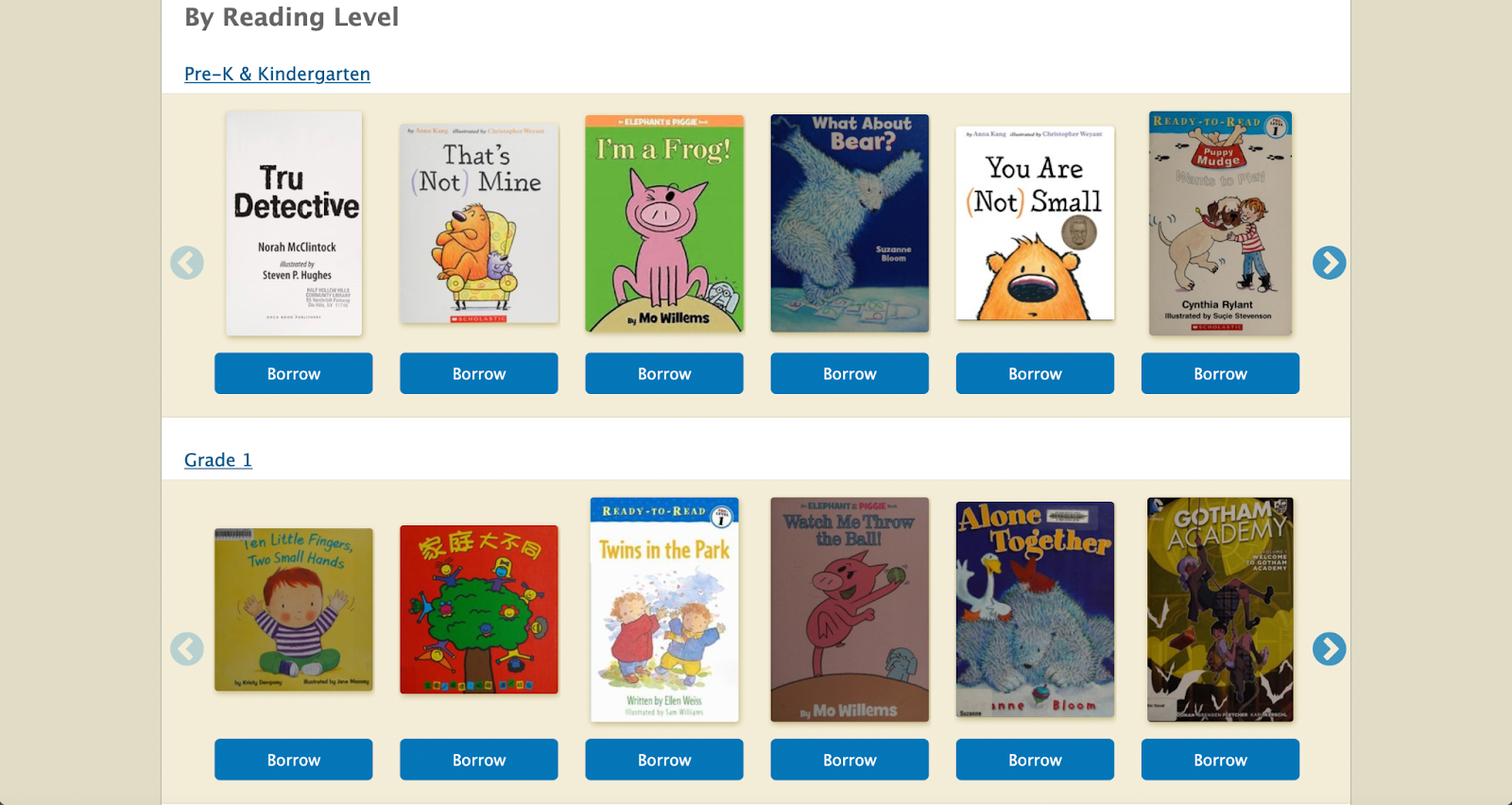
I wanted to include book carousels on my pages because they add a dynamic and interactive element that, to me, feels like a more realistic library experience than scrolling through a wall of text on a webpage. Although the coding for the book carousels confused me at first, I was guided through my confusion during a community call. In these calls, others walked me through the coding process and explained the technical setup of the subject tags. I was able to understand how the unique Collection:Canada Reads subject tags I had been adding would form the basis of the code required to create the book carousels. I used the code below, only changing the ‘collection:‘ and ‘title=’ elements to match the collection I wanted to have displayed on the page.
| {{QueryCarousel(‘subject:(“collection:Canada Reads 2025″)’, search=False, has_fulltext_only=False, title=”Canada Reads 2025”, limit=20)}} |

Celebrating My Canada Reads Collection
From August 2025 to November 2025, I was focused on building my Canada Reads collection pages, attending the Community calls on a weekly basis, and learning everything I could to make them come to life. I took on this project knowing it would be an excellent challenge, and one I am continuing to meet with openness and curiosity.
This collection has taken on a life of its own. Although I never expected to share it with anyone, I am tremendously glad I joined that first community call to share it with the Open Library team. Since then, I have established two Canada Reads collection pages, updated the metadata on many books, written this blog post, and even got the opportunity to present my collection at the 2025 Open Library Community Celebration in November 2025!
I couldn’t have predicted what I’ve accomplished with this collection, nor the recognition I’ve received. I’m incredibly proud of the work I’ve done and so, so grateful for the Open Library team’s support, without which I wouldn’t have gotten this far.
Next Steps for the Collection
This collection is a work in progress and as of this blog’s publication date, I have completed the award years from 2016 – 2025. Over the coming months, my goal is to add the remaining books from 2002 – 2015 as well as clean up the metadata for each book. I will also add the 2026 books once Canada Reads has concluded in April 2026.
This is a manual process that can be fairly time consuming as editing book metadata varies greatly depending on the popularity of the book and the number of editions it has. Although I would love for my collection to be complete, I am making sure not to rush the process and to take the necessary time to correctly input the information and create a collection that is accurate – and one that I am proud of.
My hope for this collection is for people to enjoy it and hopefully, be inspired to read some Canadian content.
If you would like to contribute to Open Library as a librarian, you can fill out this form and join the Slack channel and the weekly community call. Other contributors will provide mentorship and help you get started.